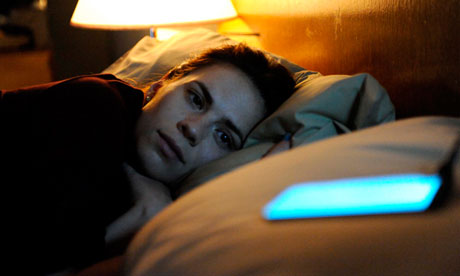
The second installment of Black Mirror’s eagerly anticipated follow-up series is a confusing, sprawling and horrific thriller. Desperately bleak in contrast to the episode that preceded it, ‘White Bear’ takes inspiration from zombie horror and spins an imaginative satire of communication technology and capital punishment.
We follow a young woman, waking up in a strange bedroom with a splitting headache and no recollection of how she got there. Fun as that may sound, our ‘protagonist’ apprehensively meanders around the house desperately looking for clues as to her whereabouts. As she leaves the house and wanders the encompassing estate, her movements are stalked by unresponsive voyeurs armed to the teeth with iphones. This serves as a blunt comment on the social media apparatus that have provided yet more barriers between us and the real world. These iphone zombies are herded by a set of masked hunters with video-game comical weaponry, from a hunting rifle to a baseball bat (typical Brooker), who have taken it upon themselves to hunt down those that are immune to the pseudo-zombification that has befallen the rest of mankind.
The episode goes on to play out as any other horror flick would do, the woman and her accomplices getting into some jeopardy with their hunters and striving to knock out the zombifying radio signal that is responsible for all the stalking masses. It feels like a B-Movie, and so it should given the context. Unremarkable dialogue, with strange pacing and some odd camerawork, make the first half an hour slow watching, as though it were building to a crescendo. And crescendo it does, with a twist as unexpected as Bruce Willis being dead on The One Show.
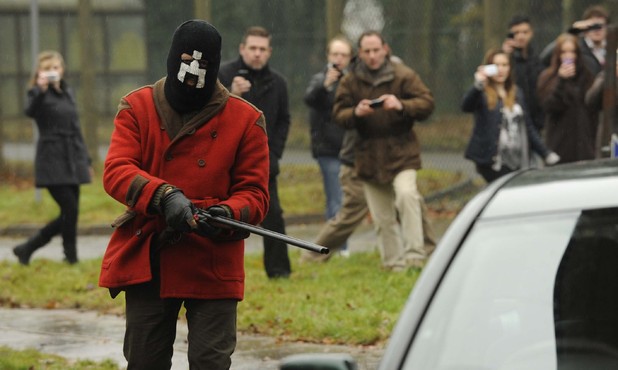
It turns out that the leading lady is being punished for a Myra Hindley-esque role in the murder of a young child, of which brief glimpses had been seen in flashbacks throughout the episode. The entire plot up until this point has been an elaborate fiction, her accomplices and tormentors just actors. Inside the radio tower, the blinking lights of electrical equipment rotate and reveal an audience of people recording her confusion on their iphones. As she is strapped to a chair, the woman is told of her crime by an irish justicar and led through a cackling canyon of incensed citizens, the very zombies who had pervaded her fictitious adventure. The mob want to punish the ‘murderer’, whose crime was to film her boyfriend as he torched the young girl to death. It makes for extremely uncomfortable watching.
So, it turns out the entire episode had taken place in a sort of ‘punishment theme park’, where people can pay to interact with the groundhog-day justice system. An endless loop of allegorical torture is painted as a fate worse than death, and one would be inclined to agree. I certainly found it sickening, but couldn’t be certain that it was Brooker’s intention. I don’t think he intended any message convincingly either way, rather I would imagine his only intention was to paint an absurd parody of what capital punishment could become. He succeeds, and despite its flaws this series stands as some of the most imaginative and enthralling television I have ever seen. Long may it continue.